Rainmaker
Loading page...

The latest legal market news — analysed, connected, and in context.
Rainmaker AI News Service
November 5, 2026

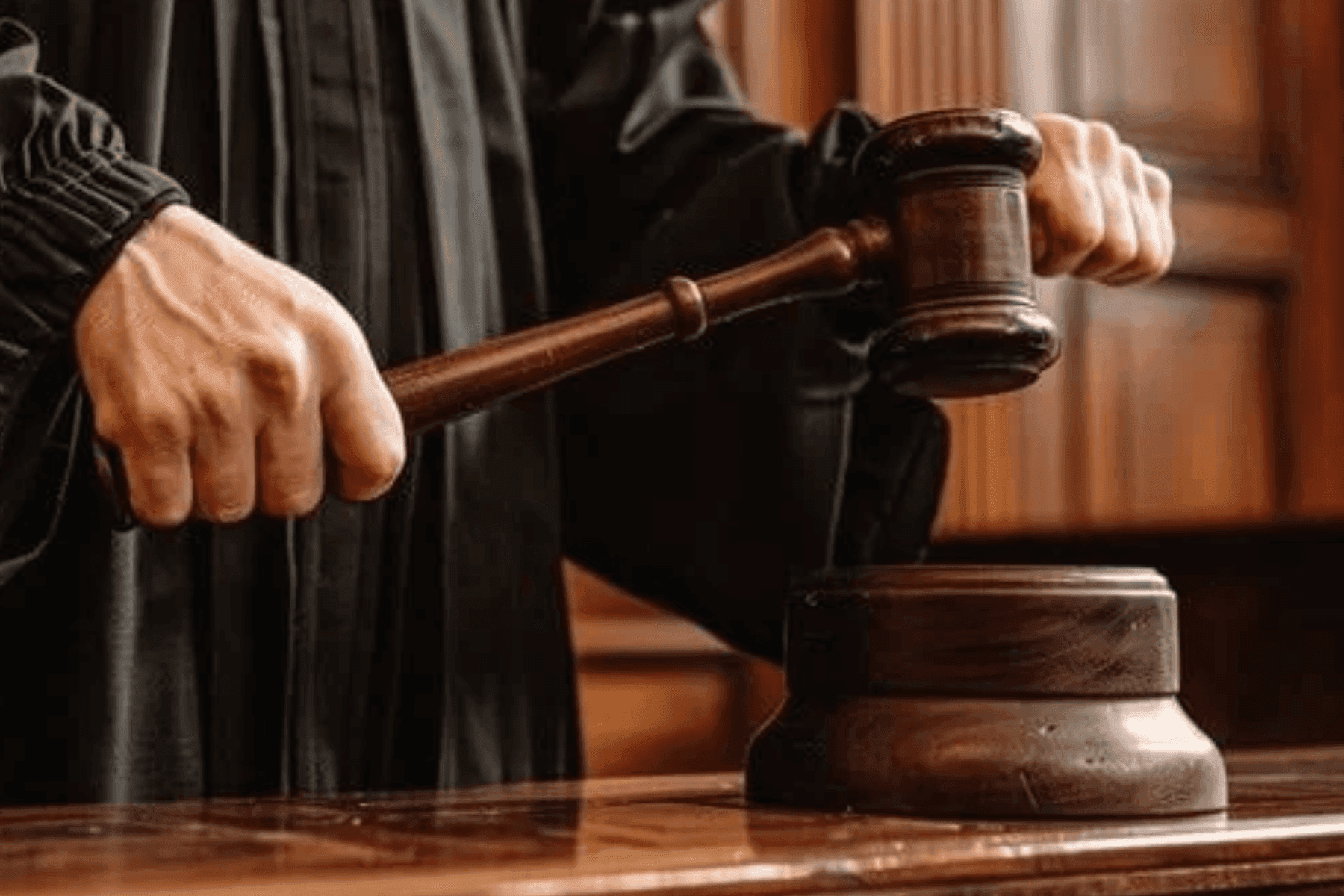
Image source: Unknown

The University of North Carolina School of Law staged a simulated US Supreme Court argument on 22 October 2026.
Three ChatGPT-based AI justices heard Monsalvo Velazquez v. Bondi, one each for the textualist, pragmatist and progressive wings, according to Reuters.
Reuters reported that the AI panel reached the same outcome as the real court, with the textualist AI justice dissenting.
The Supreme Court docket shows the real court decided the case on 22 April 2025.
Nicole Downing, the school’s assistant dean for AI, said the AI justices did not interrupt or interject as real justices do, according to Reuters.
The University of North Carolina School of Law staged a simulated US Supreme Court argument on 22 October 2026 with three AI justices. Reuters reported on 28 October 2026 that the AI panel decided the case the same way the Supreme Court did.
The argument took place during an AI-focused campus conference called “May It Please the Machine”, Reuters said. The case was Monsalvo Velazquez v. Bondi.
Reuters said the case concerned the 60-day deadline to leave the US voluntarily when a person faces removal. It asked whether the deadline moves to Monday when the 60th day falls on a Saturday. The Supreme Court docket, No. 23-929, shows the court heard argument on 12 November 2024 and decided the case on 22 April 2025.
The real court ruled 5-4. Justice Neil Gorsuch wrote the majority opinion, which held the deadline extends to the next business day when it falls on a weekend or holiday, according to Reuters. Justices Clarence Thomas and Samuel Alito were among the dissenters, the docket shows.
Organizers programmed three AI justices rather than nine, Reuters reported. One represented the textualist or originalist wing, one the pragmatist wing and one the progressive wing. Rolando Rodriguez, a university data librarian, developed the three ChatGPT justices. Each received anonymized procedural history and briefs from the real case, relevant major cases, statutes, rules and agency guidance, and opinions from the justices whose approaches they represented.
The progressive and pragmatic AI justices formed the majority and held the deadline is pushed back, Reuters reported. The textualist AI justice dissented.
Nicole Downing, the school’s assistant dean for AI, said the oral argument diverged from real life, according to Reuters. The AI justices asked the law students questions and hypotheticals, but the exchanges felt robotic and the justices did not interrupt or interject as real justices do, she said.
Downing said the school was not asking whether AI can replace the justices because it does not think that is “very likely”. She said AI “reasons in a way similar to humans, but it doesn’t yet act in a way that is similar to humans”.
Reuters did not report any plans for further experiments.
Why it matters For a litigator preparing oral argument, the relevant point is Downing’s view, as reported by Reuters, that the experiment shows the value of AI in preparing arguments and anticipating the questions judges are likely to ask. Her own finding was that the AI justices matched the real court’s reasoning but did not interrupt or interject as real justices do. It was one simulation on one case.
Article Author
Rainmaker AI News Service